But Marty Supreme, the main character, is a hustler. A shyster. And the supporting characters were shysters too. The mother, the girlfriend, the best friend. Even the minor characters made ultimatums, told lies, and carried guns. The characters found themselves in situations that required running, deceit, death, and destruction. And what movie with all those elements doesn’t have the potential to be a great movie, especially with the acting chops of the stars.
The movie was unsettling though. Irritating. I just didn’t want to hear another lie. Another slick way to wiggle out of accountability. I didn’t want to have to look at another needy narcissist surrounded by other needy narcissists trying to persuade people to do what he wants them to do. It was too much. Too close to the reality of our current lives. This is just a movie -albeit about a real person. As the audience, we want to believe him, we do. We want him to succeed, but just like everyone else, we are persuaded by the possibility that he will not hurt us with another lie; that he will do whatever it takes to turn everything around because he loves us. He tells us so a few times. But we fall into his weak promises and are disappointed.
SPOILER ALERT — At the end, the main character -who finally meets his immediate goal with his power of talk, but not his main goal of winning the international table tennis tournament- cries when he sees his newborn baby through the glass of a hospital maternity ward.
That moment is the only moment when the main character does not want something from someone for his own gain. That is the moment when the character seems redeemable. A moment that gives the audience the opportunity to believe this character. That’s when all the negative energy funnels into Marty Supreme’s heart and is transformed to a real possibility that we should trust. But then there is the other shoe. The one inside the shoe store where the story begins.
That is also the moment when the trope of a black woman caring for a white baby hits me. Wait. Whaaat? Was the black nurse the only black woman in the movie??? I started to watch the movie again just to be sure, but I stopped. While the second viewing of the movie was not as much of an affront to my moral compass as the first viewing, I didn’t want to have go searching for her. The movie takes place decades ago, and black folks -especially women- were hidden into invisibility in films.
What did I expect? I expected not to have to search to see a reflection of myself somewhere sooner than the end, and I expected to see that character more prominently. But that’s another story.
I love me some Sterling K. Brown any way you slice it. He is an excellent actor. He seems like a good person with honorable intentions in his life. Let alone he has a nice hard body that is put together in a way that is pleasing to the eye.
I just watched the first two episodes of the second season of Paradise starring Sterling K. Brown as Xavier and featuring a very diverse cast. In Season 2, Episode 1, Annie Clay (played by Shailene Woodley) holds up in Graceland while the world is being destroyed. The environment is toxic. Resources are scarce to non-existent, and she stays inside and alone for a long time. After two years, the sun begins to shine again, and a group of men break into Graceland with guns drawn. One of them pulls her by her ankles from beneath the bed where she was hiding. She spits in the face of one man and struggles before hitting a man over the head with a pan. Shortly thereafter, Annie stays in a room until the smell of food coaxes her out. Once out, she joins the group and gradually lets her guard down. Annie eats with them, laughs with them, and talks with them about their plans to go to Colorado to restart the world. She even has sex with the she spat on and hit with the pan. When the men leave with the resources they came for, Annie chooses to stay behind.
SPOILER ALERT: A few months later, Annie -now several months pregnant- sees a plane crash and ventures out to see what happened. She finds Xavier unconscious with a stab wound in his abdomen. She brings him back to Graceland injured and barely conscious and tends to his wounds. When Annie learns that Xavier is on his way to Atlanta to find his wife, she tells him no. He’s not. She declares that the two of them are going to go to Colorado to find the father of her unborn child. Then she walks out of the room and leaves Xavier handcuffed to the furniture without a chance to respond. Wait Whaaat??!??
DIGRESSION: When the shit hits the fan earlier in the episode, and everyone is confused and running, Annie, the white tour guide/leader/savior knows the answers and tells everyone else what to do. Gail Edwards, the black female security guard/friend (played by Kayla Njeri) also holds up in Graceland, and Annie cares for the woman after she gets hurt. Annie uses her first year medical resident background until -you know it- until the woman dies. Expected. No problem.
So Annie cares for the black woman like a sister. She feels safe and is friendly with a group of strange, mostly white men who break into her house, but she puts the strange, seriously injured black man who she rescues in handcuffs? Where’d she get the handcuffs from anyway? She sleeps with the white man and ties up the black man? The man who was barely capable of taking care of himself let alone being capable of being a threat to this white woman. Really??? Still???
Neither one of those characters are in S2,E3, but Xavier’s daughter, Presley is. Presley. Graceland. Can’t wait for this thread to come together.
]]>

OVERWHELMING
I’ve been told that I am overwhelming
I’m not quite sure what that means
And yet I do
I see the possible
and try to make it so
Not believing obstacles
Seeing long paths with handles
and gaps that shrink if
I just move fast enough
I am holding the hand of my grandmother
as we walk in spots where warmth
has melted the ice
We can go, I tell her
Step here
I am climbing all the way to the top
of the Great Wall
because it is there
Stopping is not going at all
I am fixing and arranging
planning and finding ways
to make things work
Even when no one asks me to
Is that overwhelming
Just too much at times
or is it
catching sun spills
flight untethered
Dropping ways along a path
full of other overwhelming souls
I have been this way all my life
The little girl
with a determined face
Always looking forward and up
Forward and up
Even in my mother’s womb
Need I not be overwhelming
Do I contain what I do
and who I am
into regular beats and
tempered hands beneath me
To me
That is overwhelming
]]>
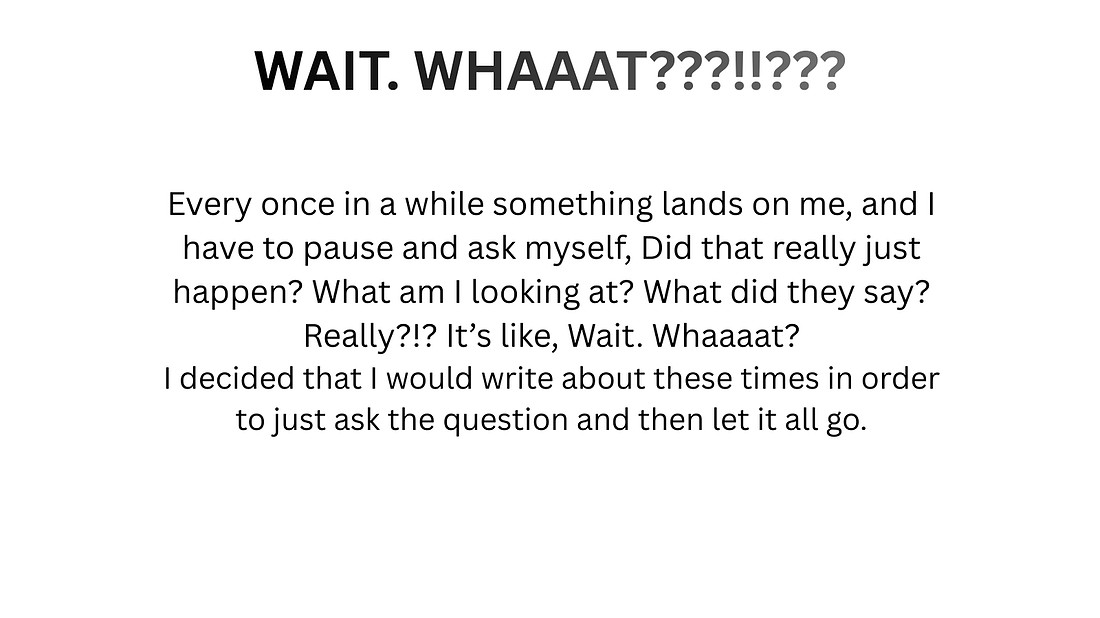
Dad passed away on February 4, 2005. Every time I go to the Music Box Theatre to see his play I get the chance to visit with him again. I am surrounded by his words and feel as if he is talking just to me. If I listen hard enough, I hear his voice and believe that he and my mother know that I am there. On the edge my seat. Savoring every moment of every performance I can. Each time I laugh anew and am moved by the relevance of the play and its truth. Each time I discover another layer of humanity in the characters. Another interpretation of the text. Each time I try to find Daddy’s message to me, his little Black girl. His grown Black daughter. And each time, I am inextricably drawn to the women of Purlie Victorious.
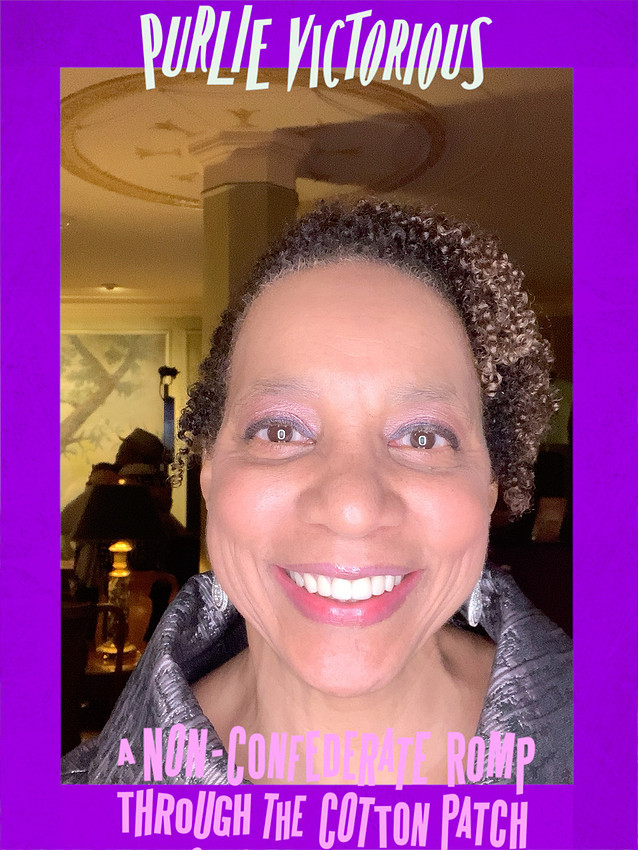

The year is young
And already I have learned that intentions are
Spectrums of boundless opportunities
To try again
]]>
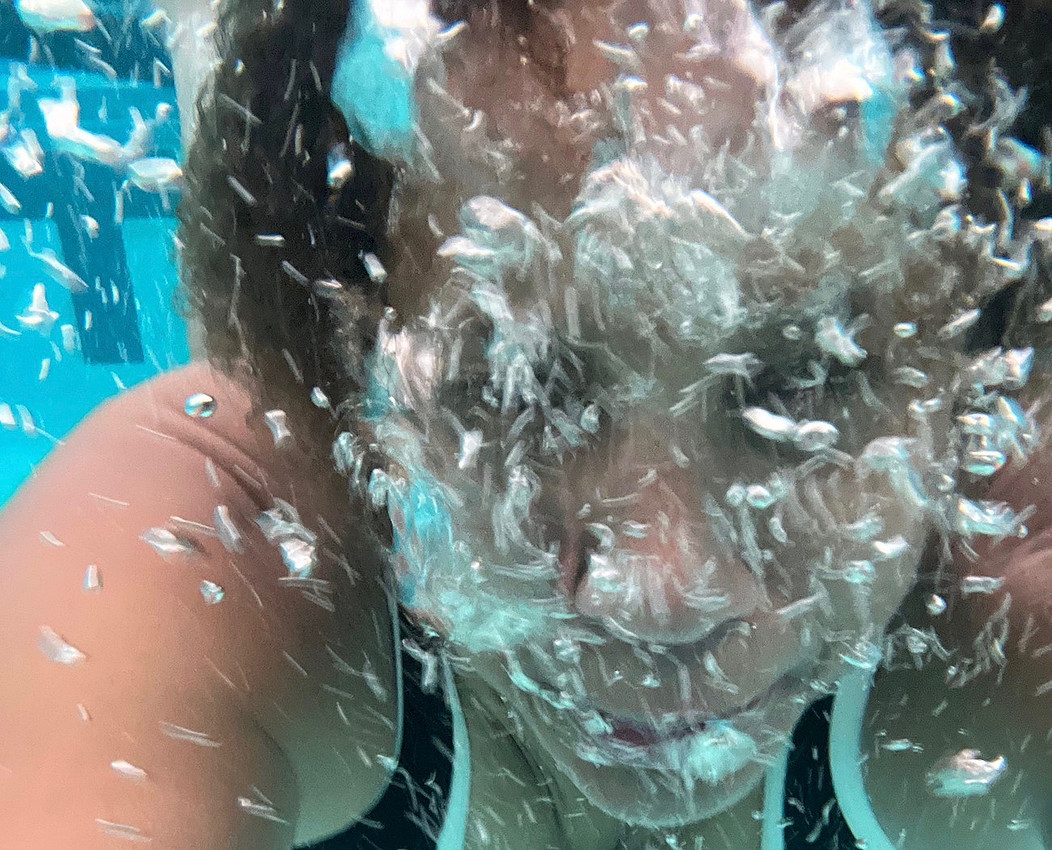 There was a time when I didn’t sense the danger
I didn’t double check or seem to care
about the what ifs of
jumping on a motorcycle
pushing myself to the front of a crowd
or diving deep into the ocean
I know that part of me is still within
My eyes widen and my skin erupts
When I notice the chance
To take a chance
But I have tucked it away
Behind daily chores
Beneath well-made beds
And in the aisle of the local grocery store
And I miss the carefree part of me
that is disconnected from common sense calculations
and familial obligations
And attached instead
to self-joy and wonder
]]>

How and when do you learn what is important? I ask that question from the perspective of an adult who learned about what is important from my parents and subsequently taught those lessons to my children. Lessons that were co-mingled with those learned by my husband from his parents. Lessons that I revise in my head for the grandchildren I hope to have.
Like all great teachers, my mother and father talked to me and exemplified what was important. There were no classroom chairs or chalkboards, rather the dining room table, the garden, and expeditions to cities or theatres or rallies served as my training ground. My parents demonstrated what was important in the stories they told and by the history they highlighted. They exemplified the importance of love. Love of self, family, spouse, and the building of relationships. There were lessons about the habits of living. Basic things like spirituality, education, health, cleanliness, honesty, survival, equanimity, struggle, respect, responsibility, order, and perseverance—stick-to-itiveness as my mother called it. There were those step-here-a-minute-sit-your-ass-down-do-you-hear-me-talking-to-you lessons and there were those invisible and silent lessons that were the by-products of sharing a home and spending time with one another. There were also lessons, prayers, and guidance written in my parents’ letters to me. In their absence, I often re-read their letters and cards and find in them the sound of their voices, the warmth of their arms, and the extent of their love for me. Always exactly what and when I need to hear about what is important in life. Especially today:
May your 14th birthday be full of surprises—gifts (or the promise of them)—and newer, deeper insights into the beauty of the human spirit as manifested through friends and those who love you.
May all your birthdays be a celebration of the discovery of the best possible in all people and all situations.
May you have the strength and determination to conquer—to overcome—all negative visions that dull the luster of your profoundly beautiful soul.
May you search for and find those aspects of work and pleasure that satisfy all your inner hungers.
And may this search of your own rich treasures bring forth a greater selflessness and dedication to truth.
We wish you a long, rich life, with good health and much deep joy.
HAPPY BIRTHDAY!
—Love Daddy & Mom & Daddy & Mom
I challenged my parents when I could and strayed from their guidance from time to time, but I believe that I hold and practice what they deemed to be important as what I now deem to be important. Some of the realizations came a while ago like when at 16 and I announced that I would not be going to college because I thought it was irrelevant. My mother’s response lasted just a few seconds, and I have since gone on to get a doctorate. Some of the realizations like the importance of planning and managing my time came much later.
Seemingly through osmosis, what you learn as important shows up throughout adulthood. It comes out of your mouth as the words of your parents as well as their temperament. It stares back at you when you look into the mirror. And you can only hope to see it in the faces of your children who, when you have with them the conversations that your parents had with you, remind you of yourself.
Certainly, however and whenever you learn what you deem important changes with experience and time. I believe that the most important lessons and guidance from my parents were in their prayers for me; the hope that I would find and facilitate joy in my life and in this world. Reading the lessons in their letters to me is like finding pages from the Instruction Manual for Life along my path. Crumb navigation indeed.
Crumb #94: May every lesson, each prayer, and all guidance create a path to joy and compassion—the truly important things in life.
]]>
Watching the PBS series The Vietnam War more than 50 years later was like placing a missing piece into a puzzle. The stories and images not only awakened what I had forgotten, but they also helped me to see and understand much more about the war in Vietnam. Although this critical documentary leaves it to the viewer to recognize that the same American and Vietnamese war crimes, lies, and tactics are being used in the continuing wars in Western Asia, it does indeed tell the story of “What we remember. What we forgot. And what we never knew” about US troops in America’s Vietnam War. This documentary provides comprehensive multiple perspectives of a period in history that was one of the major catalysts in this country’s imperialistic campaigns, the loss of independent media, domestic militarization, the drug trade, de facto discrimination, and the shift to the political right. More importantly for me, however, this documentary–particularly the voices of the American and Vietnamese soldiers and their families–brought significance to a legal-sized manila folder that I have been holding onto for a very long time.

I can’t remember exactly when, but I believe it was in the late 1980’s or early 90’s when I was hosting a writer’s workshop for a local group of writers who would come to my house to read and discuss our writing–mostly poetry. On one particular occasion, a man in the group brought a friend, a Vietnam veteran, who also brought some of his work. I can’t remember the exchange, but this man gave me his folder. At the end of the meeting, I tried to give it back, but he wouldn’t take it. He wanted me to read it and hold onto it for safekeeping. At least that’s what I recall. His work was written in long hand from top to bottom on both sides of pages that had been torn out of a ledger that had tabs with the letters of the alphabet on them. The first page consisted of poorly articulated disjointed ideas and didn’t prompt me to read on, so I didn’t. And although I never took the time to read the rest of the pages, I did keep the folder.
Throughout the years, when I came across the folder, I would try to remember the man’s name or even the name of the man who brought him to my home. I would flip through the pages and wonder why he left his words with me, and why he never tried to get them back. Several times I thought of discarding the folder, but I never did. If it were my folder, I would want to keep it, and perhaps one day he might feel the same.
After a few episodes of The Vietnam War, I thought of the folder and knew exactly where to find it–carefully tucked in a bin with my old journals. The folder and the papers it held had yellowed. The tape that bound the fragile pages had dried, and it crumbled in my lap when I opened the cover that read: THE FRONT in all capital letters. Bro Manning was written in elegant penmanship at the top.
I read some of the pages with different eyes. The first page was about smoking marijuana. Urbs the urbs, Dew the dew. My brother be, you handed me something that resembles a small tree! Those urbs that VietNamese com soy (Grass). Many days and nights I sit and draw on the bowl. Bro Manning was part of the Army Airborne 173rd, and Pattie Boozer was always on his mind: This Black Queen I do care boo cooh (much) about. I saw the names of Vietnamese cities and words like revolution, kill the pig, Uncle Tom, black power, and can you dig it? It’s Too Fucking Late was written in large letters that took up a third of one page, and journal entries were dotted with prayers: Dear Lord make me strong. Whitey hurts you worst than Sir Charles. When Charles drops his rockets in on us I gather with my Blacks because I know Charles don’t want any part of my black brothers. Our battlefield is a cruel mother. If Sir Charles doesn’t get you, Whitey will. Beware Blacks. There were expressions of anger, shows of brotherhood, accounts of racism, cries for help, as well as shards of hope.
And he was not the only one who had written in the journal. Other soldiers wrote messages to him and called him Brother Black, Big Skip, or just announced themselves: This is Theopolis J. Hall. I am a brother. I am a black man. I am Theopolis the first. I am Theopolis the last. Some were long letters with warnings, advice, and opinions. Others were short messages like those written in a yearbook. They signed their names Bro. or Brother and included their addresses: Bro. Roosevelt Taylor from Birmingham, Alabama; Kenneth M. Calhoun from Copiague, Long Island; Vaughn Fuller from Washington, DC; and LaVonce Reed from St. Louis, Mo. Among many others. I marveled at the treasure in my hands.
The Vietnam War is a testament to the excellent research and writing of Geoffrey C. Ward and the masterful visualization of Ken Burns and Lynn Novick. More so, it is a testament of the fortitude of those American and Vietnamese photojournalists, families, civilians, and soldiers who–with a kaleidoscope of motivations–experienced, recorded, protested, resisted, fought, lived, and died as a result of the atrocities of the Vietnam War. For me, it is also a special testament to Bro Manning who entrusted me with his piece of the puzzle. I will protect his pages and read his story. Then I will attempt to return his words. I may or may not find him or any of his brothers, but I owe it to them all as well as to myself to try.
]]>

I have a different photo from this event. In that photo, I am sitting on Daddy's lap and James Baldwin is at the podium. It is 1963, and we are at a rally in NYC to protest the bombing of the 16th Street Baptist Church in Birmingham, AL. For me, that photo represents the precious times I spent with my father. But this photo. This photo taken by a different photographer broadens the perspective to include Mommy, my sister Nora, Odetta, and so many others singing and holding hands and standing up -even on very young legs. This photo isn't about me being with my Daddy. This photo is about all of us standing up and doing what needed to be done about the terrorist attack that killed 14-year-old Addie Mae Collins, Cynthia Wesley and Carole Robertson and 11-year-old Denise McNair. And in the aftermath, the attacks that killed 16-year-old Johnny Robinson who was shot by a police officer and on 13-year-old Virgil Ware who was shot by a white teenager.
We were standing then as we must stand now.
It was a humbling exciting moment standing there in front of this photo. One moment of many humbling moments during our time at the museum this weekend. More later...
]]>Failure is first some days. Every once in a while I believe that. I don’t remember that I am blessed. I forget that I am the success of my parents. I have given my children all of who I am and that is enough.
Doubt knocks me down. Fear pins me to the ground where I give up and give in to the veneer of this existence and to the fallacy of what matters. As if I were expected, I am welcomed into a lone space in a cavern full of people who have also forgotten and whom I have disowned. I am only thinking of myself. Only thinking of what I lack and how I must deserve to be in this place because my descension was so quick and because I fit so easily. Regrets shower down and I almost drown without fighting. The gravity of quicksand tightens around my stilled arms and I begin to believe the darkness.
And then I remember that I am blessed. I hear the mantra, and I don’t remember why I lost sight of it. I am blessed. I breathe and open my eyes. There is light. I have health and understanding. I have loved ones. I have choices. I have the wherewithal. I am. I can. I am. I am. I. Am.
]]>
When giants fall
the earth stills
Silence
waves toward the horizon
pushing trees
Flowers bow
and large bodies of water hum
It is just a matter of time for all things;
Even the greatest among us
is merely passing through
Greatness
fills the lungs of some
Keeps them afloat above our heads
As they lift our legs
and arms and spirits
As they help us to survive this lower life
here
closer to the ground
When giants fall among us
Their breezes carry us
Their prayers
set us down gently
in open spaces
full of grace
where we inherit their strength
Absorb their intentions
Put on their hands
When greatness breathes
the final breath
Flattens and falls mortal
around our feet
Our tears roll down
from uplifted faces
elevated hearts
and clearer minds
When giants fall
we release them
in whispers, cries, and laughter
as they remind us
that we – are – giants – too
We -
are -
giants -
too-
That
is the honor and farewell
That we learn and grow and challenge and conquer
because we walked beneath these giants
whose words and work and dance and song
and care and love
carried us apace
in giant footsteps
Hoping
that we were clinging to their
ankles, hips, and shirttails;
That we were filling their shoes
Climbing on their shoulders
Knowing
that because they walked
we could fly
]]>

Bastianoni says that the story of this photograph goes beyond religious symbols to make a statement about loss. A father is being deprived of being a father, and a child is being deprived of having a father. I would add that a wife is being deprived of her husband. But as art does, this image tells many stories and resonates differently with each viewer.
In addition to seeing the image as both the loss and promise of life, I see an immigrant family from Western Asia depicted with humanity in order to counter the view of Muslims as terrorists. I see a family’s sacrifice and its display of patriotism for and assimilation into this country. The untold story -what I don’t see- creates a dissonance that resonates more powerfully in the forefront of my mind, however. The absent presence of my historical and political perspective overshadows the “photographic reality” that Bastianoni’s wants the viewer to question in order to bring additional perspectives to bear.
I am a black, African American, 60-year-old, female, native-born Muslim photographer whose ancestors were American prior to the formation of the United States. We Muslims aren’t seen as terrorists per se, we’re not seen at all. And if we are, we are not seen as “real” Muslims. Our sacrifice and patriotism is muted. Our assimilation is a burdensome assumption or an accusation of just being black, not American.
The red, white, and blue in this image is a mask disguising corrupt capitalism and greed as democracy, freedom, and peace –the promise for which this soldier most likely thought he fought and died. My perspective is swift to consider that this man is dead because of this country’s invasion of Iraq, the support of the ongoing war in Syria, its presence in Afghanistan, and the drone attacks on innocent civilians. My perspective does not easily see heroism or symbols of my safety and security.
Somewhere I read that I have the freedom to hold opinions and the right to expect just citizenship even though I reclaimed my way of life – Islam, discarded my slave name, and -for a time in my life- wore a Khimar. Somewhere I read that I have the right to shed the propaganda of this country and the obligation to embrace instead the promise of liberty. Somewhere I read that I am compelled to resist the marginalized projection of me as a black African American Muslim woman –even in art.
When I look at Bastianoni’s image, the spaces are filled with invisible African American Muslims like me. Also hidden there are the accounts of this country’s acts of terrorism against its own citizens and people all over the world. Certainly one frame cannot tell a complete story, but from the righteous to the criminal, each story that this image does contain comes from a myriad of perspectives on life, death, family, religion, citizenship, politics, and war. I suspect that the most critical story will be that of the unborn child.
He Will Never See His Father, won the Wedding and Portrait Photographer’s International (WPPI) Grand Award for 2017. The image warrants praise for its artistic quality as well as for its ability to elicit emotion including that of agitation –the true role of art as activism.
To see the image, go to:
http://www.davidbastianoni.com/2017/02/21/he-will-never-see-his-father/
]]>